
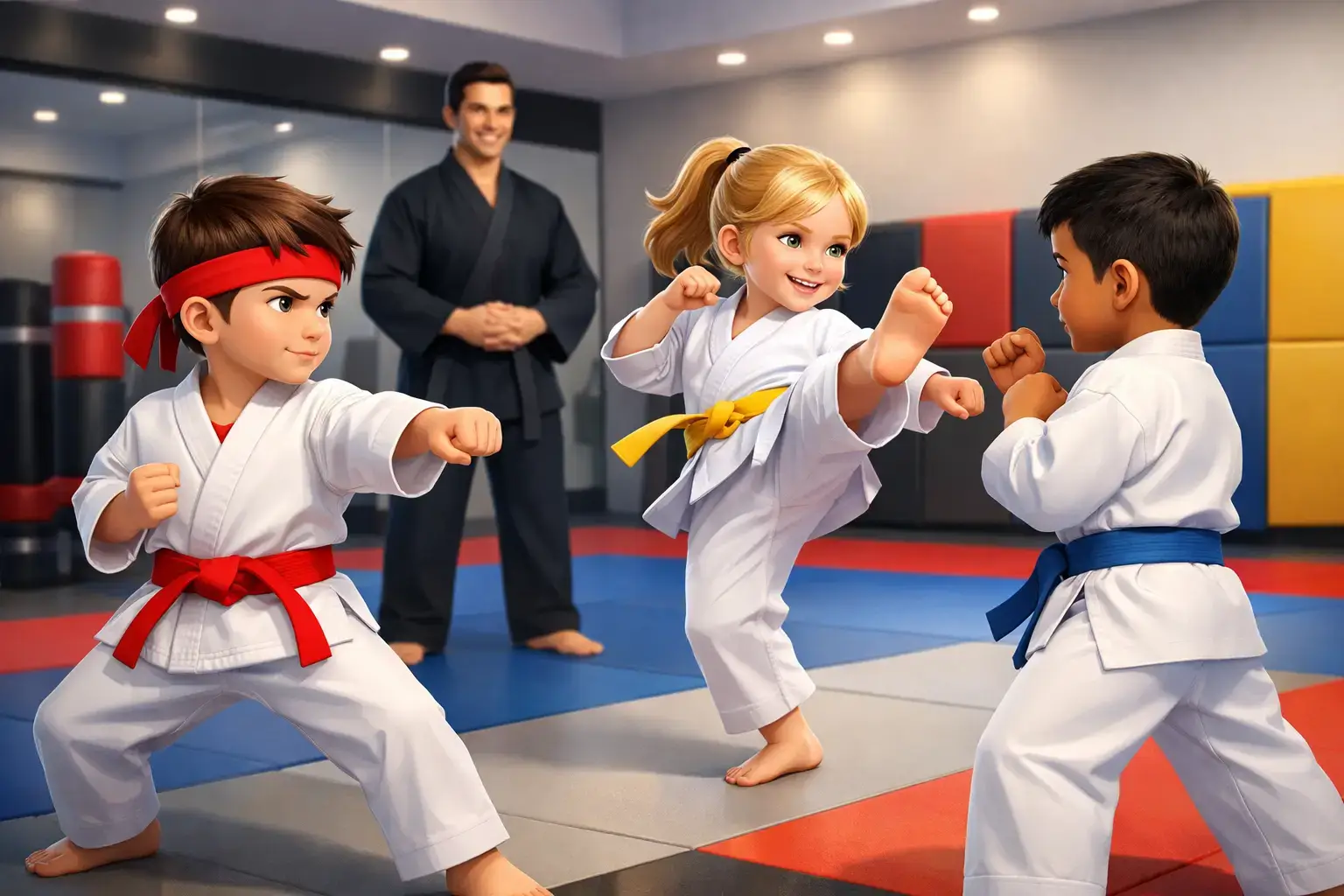
Some after-school activities leave kids tired. The right ones help them grow. For families searching for kids karate classes Egg Harbor Township parents can feel good about, the goal usually goes beyond learning punches and kicks. Parents want structure, positive role models, better listening, healthy movement, and a place where children are encouraged to do hard things with confidence.
Karate can meet those needs exceptionally well when the program is designed for children, not just scaled-down adults. That difference matters more than many parents realize. A strong class should feel organized, safe, motivating, and age-appropriate from the moment a child steps onto the mat.
What parents are really looking for in kids karate classes Egg Harbor Township
Most parents are not searching for the most intense training room or the flashiest moves. They are looking for an activity that supports the whole child. That often means finding a place where instructors teach respect as clearly as technique, where progress is measurable, and where children are expected to try their best without being overwhelmed.
For younger kids, karate works best when classes are structured around attention span, coordination, and emotional development. A 5-year-old does not need the same pace or expectations as a 10-year-old. Good instruction recognizes that. Classes for children should balance movement, repetition, listening, and encouragement so students stay engaged while building real skills.
Parents also tend to care about consistency. They want to know that if their child shows up week after week, there will be a clear path forward. That might look like improved focus at home, more self-control in social settings, stronger balance and coordination, or simply a child who begins to believe, “I can do this.”
Why karate appeals to so many families
Karate has a practical advantage over many kids’ activities because the benefits reach into everyday life. Children are not just burning energy. They are practicing how to follow directions, wait their turn, respond respectfully, and keep working when something feels difficult.
That is one reason karate often appeals to busy families. Parents want their child in an environment that is active and positive, but they also want the time spent there to count for something. A strong martial arts program can support fitness, discipline, and confidence all at once.
There is also value in the routine. Kids tend to thrive when expectations are clear. Bowing onto the mat, standing in ready position, listening for instructions, and practicing with purpose all reinforce habits that carry beyond class. Not every child responds to team sports, and not every child wants an activity where they blend into a group. Karate gives each student an individual path while still making them part of a community.
Confidence grows differently here
A lot of children’s activities promise confidence, but karate develops it in a very specific way. It is not built on empty praise. It comes from effort, repetition, and visible progress.
A child who could not hold a stance steadily at first learns to do it with control. A student who was nervous about speaking loudly learns to answer with confidence. A child who struggled to focus for a full class begins finishing drills with pride. These moments may look small from the outside, but they add up.
This kind of confidence tends to be steadier because it is earned. Kids start to understand that improvement comes from showing up, listening, and practicing. That lesson helps on the mat, in school, and at home.
Discipline without harshness
Some parents worry that karate will feel too strict. Others worry it will be little more than playtime in a uniform. The best programs avoid both extremes.
Children need structure, but they also need encouragement. Strong karate instruction sets clear standards while still being warm and motivating. Students are expected to pay attention, demonstrate respect, and give effort. At the same time, instructors should know how to redirect children positively and keep the atmosphere supportive.
That balance is especially important for beginners. If a child is shy, energetic, easily distracted, or still learning how to participate in group activities, they need a class that meets them where they are while helping them improve. Discipline should feel like guidance, not intimidation.
What to look for in a kids’ karate program
Parents often ask the same basic question: how do I know if a karate school is the right fit? The answer usually comes down to what happens in the room, not just what is written in a brochure.
Look at how instructors talk to children. Are they clear, patient, and confident? Do they maintain order without creating fear? Do they know how to challenge students while still helping them feel successful?
Pay attention to class organization too. Good kids’ classes move with purpose. There is a rhythm to them. Warm-ups, technique practice, drills, and age-appropriate instruction should fit together in a way that keeps children engaged. If classes feel chaotic, too advanced, or poorly supervised, that is a red flag.
It also helps to look for age-specific programs. Grouping children by development level creates a better experience for everyone. Younger students often need shorter explanations, more repetition, and different teaching methods than older kids. A program that recognizes these differences is more likely to help students succeed.
The value of age-appropriate instruction
Not every child starts karate for the same reason. Some need confidence. Some need focus. Some simply need a positive outlet for energy. Age-appropriate instruction gives each child the best chance to grow.
For younger children, classes often focus on foundational skills such as listening, balance, coordination, self-control, and basic movement. The goal is not perfection. It is learning how to participate, how to follow structure, and how to feel proud of effort.
As children get older, they can handle more technical instruction, greater physical challenge, and more personal responsibility. They begin to understand the connection between discipline and progress. They also become more aware of self-defense concepts, body control, and the importance of respect in training.
When a school teaches according to age and stage, children are less likely to feel frustrated and more likely to stay engaged long enough to see the real benefits.
A local program should fit family life
For Egg Harbor Township-area families, convenience matters, but so does trust. Parents want a place that feels dependable. They want to know their child is learning in a clean, well-run environment with instructors who understand children and care about their progress.
That community piece is often what turns karate from “one more activity” into something more meaningful. When families feel welcomed, when students are recognized as individuals, and when progress is celebrated in a healthy way, children tend to stay motivated. They also start to feel a sense of belonging, which can be powerful for kids who need a boost socially or emotionally.
A family-focused academy should understand that karate has to fit into real life. Schedules matter. Communication matters. Parents need to know what their child is working on and why it matters. The strongest schools make that easy.
With more than 30 years of serving local families, Modesto’s Karate Academies
( www.ModestoKarate.net ) has seen how much children can change when they are given consistent guidance, encouragement, and a place to grow.
Is karate right for every child?
Usually, yes, but the reasons can vary. Karate can be excellent for children who need more focus and routine. It can also be a great fit for kids who are already active and want a challenge with clear goals. Shy children often benefit from the confidence-building side of training, while high-energy kids may respond well to the structure and physical outlet.
That said, it does depend on the child and the program. Some children need time to warm up. Others need instructors who are especially skilled at redirection and motivation. A good school understands that progress is not always linear. Some students gain confidence quickly. Others improve little by little over time.
The key is finding a class environment where your child can be supported, challenged, and seen.
What progress really looks like
Progress in karate is not only about belts. Belt advancement can be motivating, and it gives children something tangible to work toward, but the deeper signs of growth often show up elsewhere first.
You may notice your child listening better, speaking more confidently, or handling frustration with more control. You may see improved posture, stronger coordination, or a greater willingness to try new things. These changes matter because they reflect character development, not just athletic improvement.
That is why many families stay with karate long term. The benefits are practical, but they are also personal. Children grow in ways that support school, friendships, family life, and their own sense of capability.
If you are weighing activities for your child, it helps to think beyond keeping them busy. The best kids karate classes Egg Harbor Township families choose give children a place to move, learn, focus, and grow with purpose. For many parents, that is exactly what makes karate worth it. ( www.ModestoKarate.net )
