
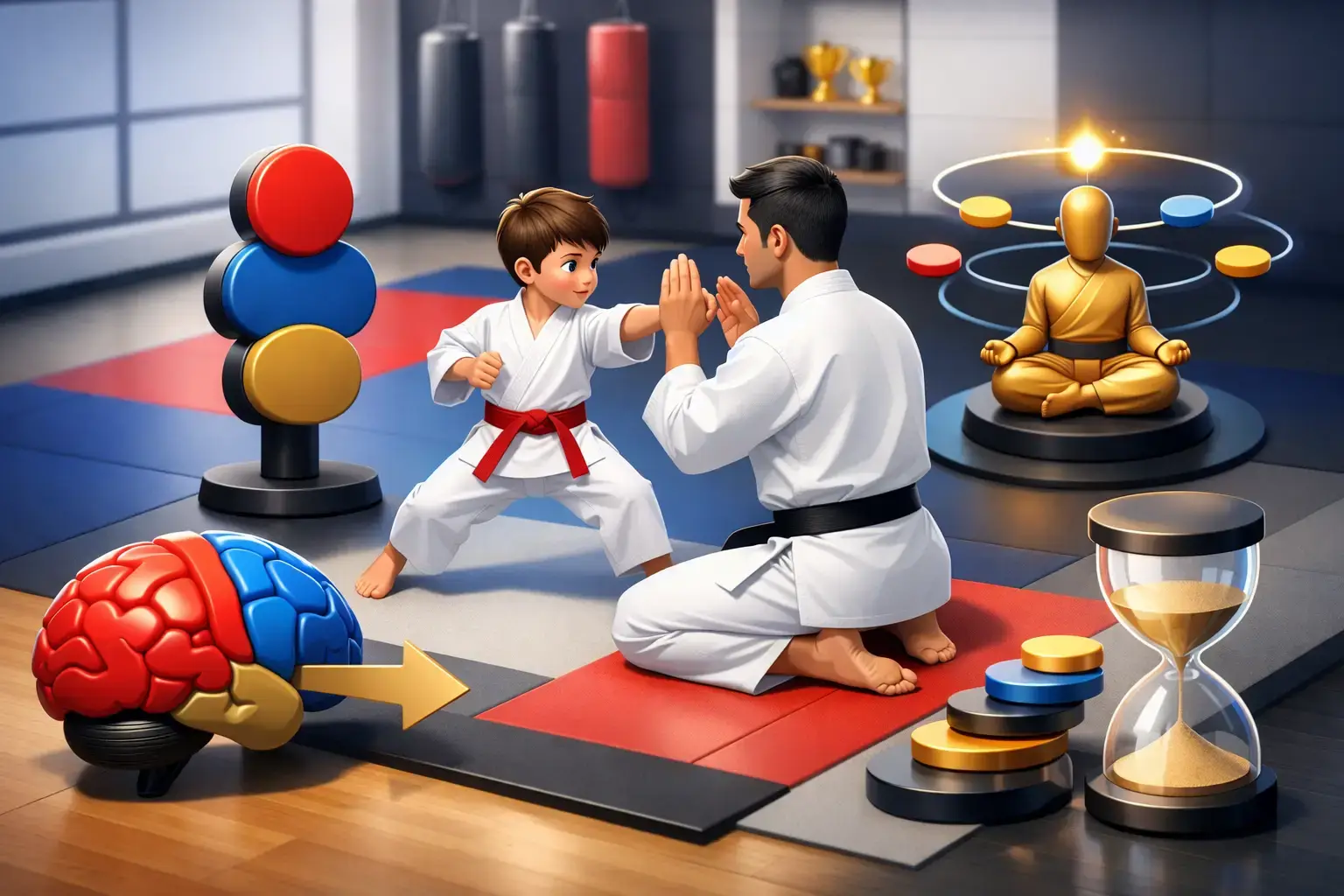
One of the first things parents notice in karate class is not a fancy kick. It is the moment a child who usually fidgets, interrupts, or drifts off starts standing still, making eye contact, and following directions. So, does karate help attention span? In many cases, yes – but not by magic, and not overnight.
Karate can support attention because it gives students a clear structure for where to put their mind and body at the same time. Instead of asking a child to simply “focus,” class gives them a job. Watch the instructor. Wait for the count. Hold the stance. Listen for the next step. Reset and try again. For many kids, that kind of guided attention is much easier to practice than sitting still and being told to concentrate.
Why karate can improve focus
Attention is not just about being quiet. It includes listening, staying on task, controlling impulses, switching between activities, and coming back after distraction. Karate works on all of those skills in a very active way.
In a good class, students are constantly practicing short bursts of concentration. They bow in, line up, respond to instructions, move with intention, and pause when asked. That rhythm matters. It teaches that focus is something you do, not just something you either have or do not have.
Karate also gives immediate feedback. If a student misses part of a combination, loses balance, or starts looking around the room, they can feel the difference right away. Then they get another chance to correct it. That loop of attempt, feedback, and adjustment helps build mental endurance over time.
For younger children especially, movement can actually make concentration easier. Some kids focus better when their bodies are engaged. Karate channels energy into specific tasks, which can reduce the restless, scattered feeling that shows up in less structured activities.
Does karate help attention span in kids?
For many children, yes. Karate can be especially helpful because it combines clear expectations with repetition and positive accountability. Kids learn that there is a time to move fast and a time to freeze, a time to speak and a time to listen. That back-and-forth is a big part of attention control.
Young students usually do best when instruction is age-appropriate. A 5-year-old will not focus the same way a 10-year-old does, and they should not be expected to. In quality beginner programs, classes are broken into manageable steps. Children are asked to pay attention for short periods, then re-engage through movement, partner drills, or a new skill. That pacing helps them succeed.
Parents often report changes outside class too. A child may get better at following multi-step directions, waiting their turn, or finishing a task before moving on to the next thing. Those improvements do not come from punching and kicking alone. They come from practicing self-control in a structured setting, week after week.
That said, karate is not a cure-all. Some children improve quickly, while others need more time and more support. If a child has significant attention challenges, the best results usually come when karate is part of a bigger picture that may also include school supports, home routines, and guidance from professionals.
What skills in class carry over to daily life
The transfer happens through habits. When students are taught to stand ready, listen for cues, and complete a sequence in order, they are practicing the same mental skills used in the classroom and at home.
A child who learns to stop and wait for instruction before moving may also become better at not blurting out in class. A student who repeats a form with care may start showing more patience with homework. A child who learns to reset after making a mistake may become less frustrated when things feel hard. Those are small wins, but for families, they can feel huge.
Does karate help attention span in teens and adults?
It can. Attention challenges are not limited to young children, and neither are the benefits of training. Teens often respond well to karate because it gives them a demanding but positive outlet. They are asked to be present, manage emotions, and stay mentally engaged under pressure.
For adults, karate can serve as a break from constant distraction. Many people spend their day switching between screens, notifications, and responsibilities. In class, the expectation is simple. Be here. Pay attention. Work on the skill in front of you. That kind of focused practice can feel refreshing.
Karate also trains what many adults need most – sustained attention with purpose. Holding a stance, learning a sequence, refining timing, and sparring safely all require concentration. Over time, students often notice better mental discipline, not because karate removes stress, but because it teaches them how to direct their attention instead of chasing every distraction.
What makes karate different from other activities?
Many sports help with focus, and karate is not the only good option. What makes it different is the combination of structure, repetition, respect, and self-control.
In some activities, students can fade into the background. In karate, every student is expected to participate with intention. There is a routine to class, a code of conduct, and a steady progression of skills. That consistency helps students know what is expected and gives them regular opportunities to practice meeting those expectations.
Karate also asks students to control power, not just produce it. They learn to move with precision, stop on command, and stay aware of the people around them. That balance between action and restraint is one reason martial arts can be so helpful for attention and impulse control.
The role of repetition
Repetition gets a bad reputation because adults sometimes assume kids will get bored. In reality, repetition is how many students build confidence and attention. When a child practices the same stance or combination several times, they are learning to stay mentally connected to the task. They are also learning that improvement often comes from sticking with something a little longer than feels easy.
This is especially valuable for kids who tend to give up quickly. Karate teaches that progress is earned in steps. That mindset can carry into school, chores, and other parts of life.
When the answer is “it depends”
If you are asking whether karate helps attention span, the honest answer is yes for many students, but results depend on the class environment.
A well-run program will have organized instruction, clear boundaries, positive reinforcement, and teachers who understand child development. It should feel structured without feeling harsh. Students should know what to do, what comes next, and how to recover when they make a mistake.
The fit matters too. Some children need a class with shorter activities and frequent redirection. Some teens need challenge and accountability. Some adults want a focused workout that also sharpens the mind. The right program meets students where they are and helps them grow from there.
Consistency matters just as much. One class will not transform attention span. The benefit comes from regular practice. Just like reading improves by reading and strength improves by training, focus improves by doing focused work repeatedly.
Signs karate is helping with attention
Families usually notice progress in everyday moments before they hear a child explain it. A student may start responding faster to directions. They may show more patience when waiting. They may finish drills with less wandering, or recover from distraction more quickly than before.
At home, parents may notice fewer reminders are needed during routines. In school, teachers may mention better listening or improved self-control. These changes are not always dramatic, but they are meaningful because they point to growing discipline, not just temporary excitement.
For families in Egg Harbor Township and nearby communities ( www.ModestoKarate.net/kids-martial-arts ), that is often the real value of karate. It is not only about learning techniques. It is about helping children and adults build habits that support confidence, respect, and better daily performance.
Karate will not make every student perfectly attentive, and it should never promise that. What it can do is give people a place to practice focus in a way that is active, encouraging, and consistent. Over time, that practice adds up. Sometimes the first sign is simple: a child who used to look everywhere but the instructor is suddenly locked in, listening, and proud of it. That is a strong place to begin.
