
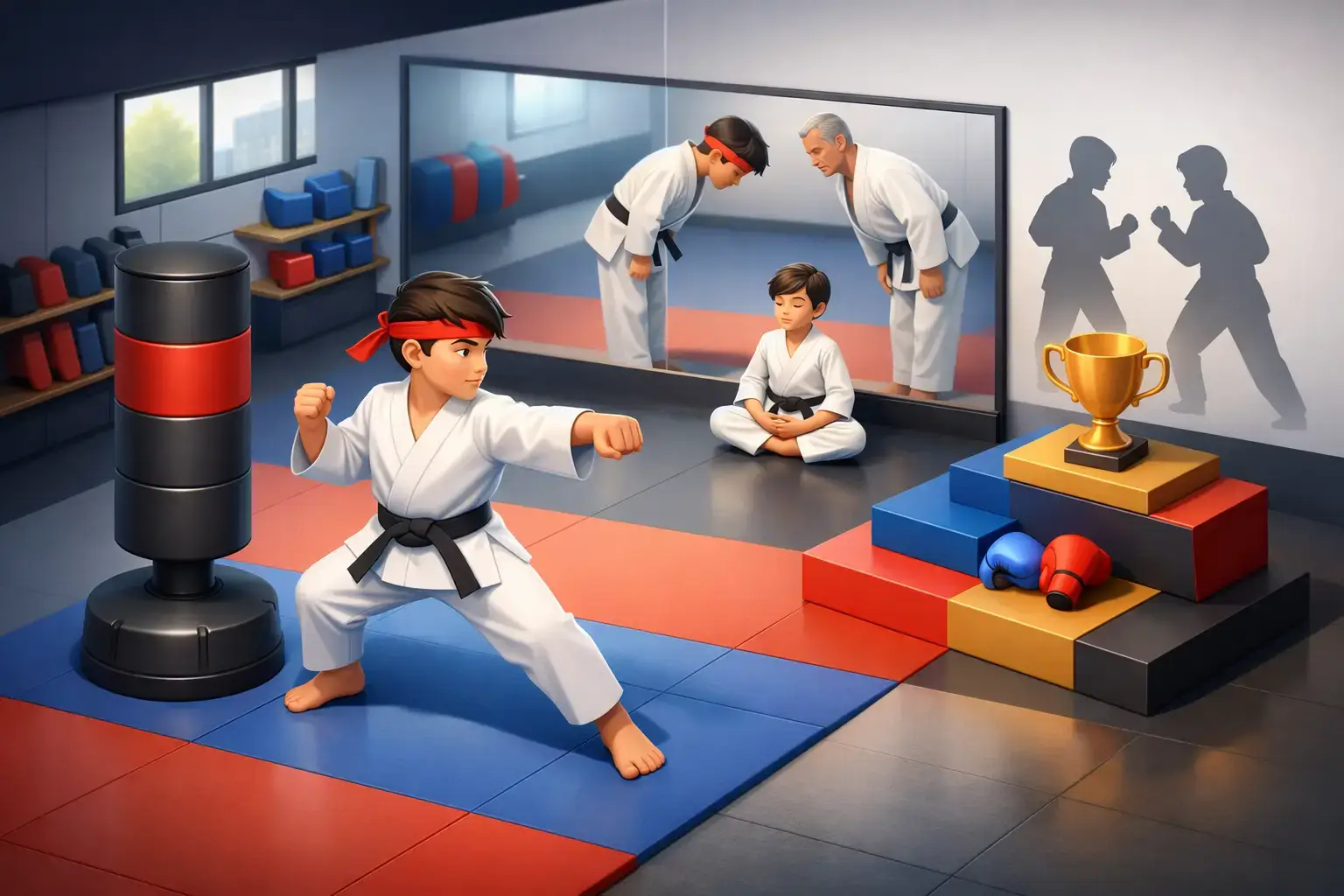
A child bows before class, lines up with focus, and waits for instruction. That small moment says a lot. Character development through karate does not happen through speeches or slogans. It happens through habits – showing respect, controlling impulses, trying again after mistakes, and learning how to carry yourself with confidence.
For many families, that is the real value of martial arts. Kicks and punches may be what people notice first, but the lasting benefits usually show up somewhere else. Parents see better listening at home. Teachers notice improved focus in school. Students start believing they can handle hard things without giving up.
Why character development through karate works
Karate gives students a structure that many other activities do not. There are clear expectations, consistent routines, and visible goals. Students learn that progress comes from effort, not excuses. That lesson matters whether a child is learning their first stance or an adult is returning to fitness after years away.
The reason this works so well is simple. Character is built through repetition. A student who practices self-control in class starts to use that same self-control when frustrated at home or challenged at school. A student who learns to accept correction without shutting down becomes more coachable in other parts of life too.
Karate also creates a healthy balance between support and accountability. Good instruction is encouraging, but it does not remove standards. Students are expected to try, to listen, and to improve. That combination helps people grow without feeling defeated.
The traits students build on the mat
Discipline that becomes a daily habit
Discipline is one of the first things families notice. In karate, students follow directions, practice technique carefully, and stick with drills even when they get repetitive. There is no shortcut around consistency.
Over time, discipline stops feeling like something forced by an adult. It becomes part of how a student approaches challenges. Kids learn that paying attention matters. Teens learn that steady work beats raw talent. Adults often rediscover the value of routine in a way that feels motivating rather than punishing.
That said, discipline develops differently at each age. A 5-year-old may be learning to stand still and wait their turn. A teenager may be learning to train seriously even on low-energy days. The principle is the same, but the teaching has to match the student.
Respect with real meaning
Respect in karate is not just about saying yes sir or yes ma’am. It shows up in how students treat instructors, training partners, and themselves. They learn to listen when someone else is speaking, to practice safely, and to value the effort of others.
This matters because respect is easy to talk about and harder to teach. In a karate class, it becomes visible. Students bow, take turns, and learn that every person in the room deserves consideration. For children especially, that kind of repeated practice can shape how they behave in school, at home, and with peers.
Real respect also includes humility. Students learn they will not be perfect every day. Some skills come quickly and others take time. Accepting that without frustration is part of growth.
Confidence built on effort, not hype
There is a big difference between confidence and empty reassurance. Strong confidence comes from doing difficult things and seeing progress over time. Karate gives students that experience again and again.
A beginner may start class feeling shy, uncertain, or physically awkward. Then they learn a combination, earn a stripe, break through a challenge, or speak up louder during class. Those moments add up. Confidence becomes more grounded because it is based on proof.
This is especially valuable for kids who need help coming out of their shell and for teens navigating social pressure. It matters for adults too. Many adults walk into a martial arts class feeling out of practice, out of shape, or nervous about starting. Progress reminds them that growth is still available at any age.
Resilience under pressure
Karate teaches students how to respond when something is difficult. They miss a move, forget a sequence, or struggle to earn their next rank. Then they try again.
That cycle is one of the best lessons martial arts offers. Students learn that frustration is not failure. Correction is not criticism. Slow progress is still progress. In a world where many people quit the moment they feel uncomfortable, resilience becomes a major advantage.
Of course, resilience is not built by making class harsh or intimidating. It grows in an environment where students feel safe enough to be challenged. Good programs push students without tearing them down.
How karate shapes behavior outside class
The strongest programs connect martial arts lessons to daily life. If a student learns focus in class but never applies it anywhere else, the impact stays limited. The goal is transfer.
For younger children, that may mean better listening, improved patience, and more self-control during stressful moments. For school-age kids, it can mean sticking with homework, handling disappointment better, and showing more responsibility. Teens often benefit from having a structured outlet that supports self-discipline and positive decision-making during a stage when outside influences can be strong.
Adults see carryover too. Karate can sharpen mental focus, improve stress management, and create a healthier sense of confidence. It also helps people practice calm under pressure, which has value at work, at home, and in everyday interactions.
Still, results are not automatic. A student who attends consistently and engages with the process will usually gain more than someone who treats class casually. Character development depends on repetition, coaching, and time.
What parents should look for in a karate program
Not every martial arts program approaches character development the same way. Some focus heavily on competition. Others lean more toward recreation. Neither approach is automatically wrong, but families who want strong developmental benefits should pay attention to the culture of the school.
Look for a program where expectations are clear, instruction is age-appropriate, and positive behavior is reinforced consistently. Younger students need structure, but they also need teaching that fits their attention span and developmental stage. Older students need challenge, accountability, and leadership opportunities.
The role of the instructor matters too. Technical skill is important, but so is the ability to lead with patience and authority. Students respond best when they know the standard is firm and the environment is supportive. That is often where the deepest growth happens.
For families in Egg Harbor Township and nearby communities, this is one reason local parents often value established schools with a strong reputation. Experience matters when the goal is not just activity, but guidance.
www.ModestoKarate.net/kids-martial-arts
Character growth looks different by age
A preschool or early elementary student is usually building foundational habits. They are learning how to follow directions, participate in a group, and manage big feelings. Progress may look small from week to week, but those small wins matter.
An older child often begins connecting effort with achievement in a more concrete way. They can understand responsibility, goal-setting, and the satisfaction of earning advancement through work. At this stage, karate can be especially powerful for confidence and self-control.
Teenagers benefit from challenge, identity, and belonging. They need environments that respect their growing independence while still holding them accountable. Karate can offer that balance, along with practical self-defense and a strong sense of purpose.
Adults usually come in with different goals, but character development still matters. Training can improve patience, consistency, humility, and mental toughness. Adults often appreciate that karate asks them to be fully present, which is not always easy in a busy life.
More than an activity
When people think of karate, they often think in terms of fitness, self-defense, or skill. Those benefits are real. But for many students, the bigger change is internal. They become more focused, more respectful, more confident, and more capable of handling challenges without falling apart.
That is why families often stay with karate longer than they expected. They come for movement or self-defense, then realize the training is shaping attitude, behavior, and mindset in ways that carry into everyday life. At a school like Modesto’s Karate Academies, that kind of growth is part of what makes training meaningful for the whole family.
The best part is that character is never finished. Every class is another chance to practice patience, effort, respect, and resilience. And that kind of progress tends to show up long after the lesson ends.
www.ModestoKarate.net/kids-martial-arts
