
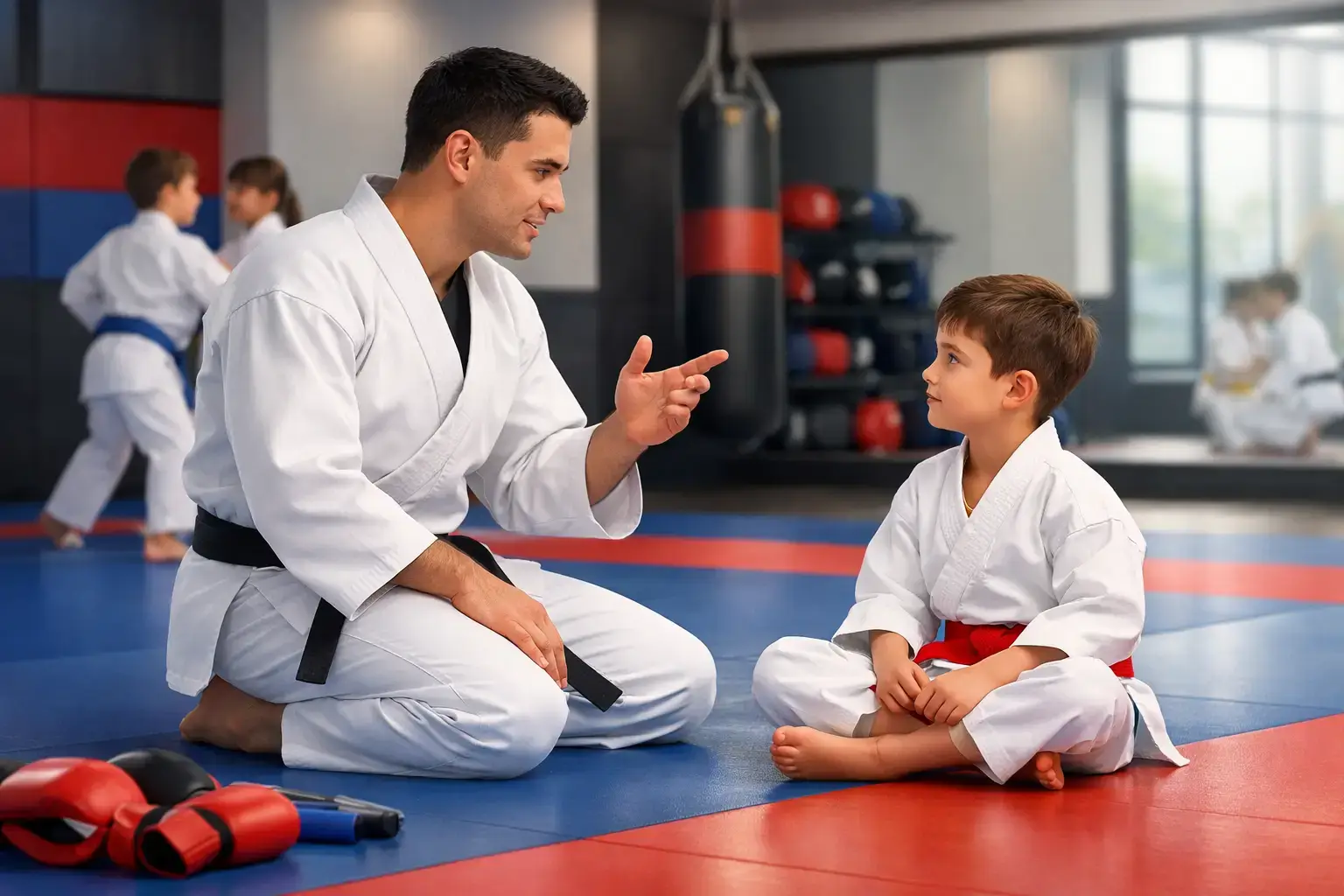
If you have to repeat yourself three times before your child puts on shoes, looks up, or follows a simple direction, you are not alone. Many parents start looking into activities because they want more than exercise – they want structure, focus, and better behavior at home. That is exactly why families often ask whether improve child listening skills karate programs can really make a difference.
The short answer is yes, but not in a magic-wand way. Karate helps children listen better because it gives them a clear system for attention, response, and follow-through. In a good class, kids learn that listening is not passive. It is something they do with their eyes, body, and actions.
Why karate helps children listen differently
A lot of children struggle with listening not because they are defiant, but because they are distracted, overstimulated, or unsure what is expected. Telling a child to listen better is often too vague. Karate changes that by making expectations visible and consistent.
When a child enters class, there is a routine. They line up, focus on the instructor, wait for direction, and respond at the right moment. They practice stopping when told, starting when told, and adjusting based on feedback. Over time, that repetition builds a habit. Children begin to connect listening with action instead of hearing with no response.
This matters because many everyday challenges at home come down to that exact gap. A child may hear, but not transition. They may understand, but not act. Karate bridges that gap by practicing one of the most important life skills children need – paying attention and doing what comes next.
How improve child listening skills karate training works in practice
Karate classes are structured in a way that supports listening from several angles at once. First, children are asked to focus on one speaker in a room with clear boundaries. That alone can be powerful for kids who are used to a lot of noise and competing distractions.
Second, instructions are usually short and direct. Instead of long explanations, a child hears a clear cue, sees a demonstration, and repeats the movement. This helps children who respond better when directions are simple and immediate.
Third, karate gives fast feedback. If a child is not paying attention, they miss the next move, stand in the wrong spot, or need correction. The lesson is immediate, but in a supportive setting. They learn that listening helps them succeed, feel confident, and stay connected to the group.
That is one reason parents often notice changes outside the dojo. Children start responding faster, making better eye contact, and showing more awareness when adults speak. The change may be gradual, but it is often very real.
Listening is tied to respect, not fear
One of the biggest misconceptions about martial arts is that children improve behavior because they are being intimidated into obedience. In a healthy karate program, that is not what happens at all.
Children learn respect through consistency, encouragement, and standards. They bow, wait their turn, and acknowledge instruction because those behaviors are part of the class culture. The goal is not fear. The goal is self-control.
That distinction matters. Fear may create short-term compliance, but it rarely builds lasting character. Respect-based instruction helps children understand why listening matters. It keeps them safer, helps the class run smoothly, and shows consideration for others.
For many parents, that is the real value. They are not looking for a harsh environment. They want positive authority, clear expectations, and role models who reinforce discipline in a healthy way.
What age makes the biggest difference?
Karate can help at many ages, but the way it helps depends on the child’s stage of development. Younger children, especially ages 4 to 6, often benefit from the routine itself. They are learning how to stand still, follow one-step and two-step directions, and shift attention from play mode to learning mode.
For elementary-age children, listening often improves because classes ask for more responsibility. They need to remember combinations, respond to corrections, and stay mentally present through longer segments of instruction. That can strengthen focus and reduce some of the impulsive habits parents see at home or school.
Older children may benefit in a different way. They are often capable of listening, but not always motivated to do it. Karate gives them a reason to pay attention because progress, rank advancement, and skill development depend on it. In that sense, listening becomes part of achievement.
What parents should realistically expect
Karate is a strong tool, but it is not instant. If a child has deeply rooted struggles with impulse control, emotional regulation, or attention, progress may come in small steps. That does not mean the training is not working. It usually means the child needs time, repetition, and the right teaching approach.
Most parents who see the best results pay attention to patterns rather than looking for overnight change. Maybe their child still needs reminders, but now responds on the second request instead of the fifth. Maybe transitions are smoother. Maybe teachers mention improved classroom focus. These are meaningful wins.
It also helps when parents and instructors work from the same values. When a child hears consistent messages about respect, focus, and follow-through both in class and at home, those habits tend to stick better.
Signs a karate program can truly improve listening skills
Not every martial arts class is equally effective for behavior development. Some are excellent for fitness and fun but less intentional about life skills. If listening and focus are a big priority for your family, the teaching style matters.
Look for a program where instructors are clear, organized, and experienced with children. Classes should be age-appropriate, not just smaller versions of adult training. Young students need direction that matches their attention span and developmental level.
You also want to see structure without chaos. A good class is active, but not uncontrolled. Students should know where to stand, when to respond, and how to reset their attention when the instructor speaks. That rhythm is where a lot of listening growth happens.
Positive reinforcement is another strong sign. Children improve faster when instructors notice effort, not just mistakes. Encouragement builds confidence, and confident kids are often more willing to engage, listen, and try again.
For families in Egg Harbor Township and nearby communities, this is one reason long-standing schools with a strong family focus often stand out. Experience matters when the goal is not only teaching punches and kicks, but helping children develop better habits that carry into everyday life.
Why listening improves at home after karate
Parents are sometimes surprised that progress in class spills over into family routines. The reason is simple. Karate teaches children a repeatable pattern: pause, focus, respond. Once that pattern becomes familiar, it can show up in other settings.
A child who practices standing still and making eye contact during instruction may begin doing that more naturally when a parent gives a direction. A child who learns to wait for a cue before moving may become less reactive during busy moments at home. These changes are not always dramatic, but they can make family life feel noticeably smoother.
There is also a confidence piece. Children who feel successful in a structured environment often become less resistant overall. They are used to meeting expectations and feeling proud of doing so. That sense of competence can reduce some of the pushback parents interpret as not listening.
The trade-off every parent should know
Karate works best when it is consistent. One class here and there may be enjoyable, but real behavioral benefits usually come from regular attendance over time. Like any developmental activity, progress is built through repetition.
The other trade-off is that children still need support outside class. Karate can reinforce listening skills, but it should not carry the full load alone. Clear routines, calm direction, and follow-through at home matter too. The strongest results usually come when karate becomes part of a bigger picture of healthy structure.
That is also why family-centered programs can be so valuable. When the school understands child development and communicates clearly with parents, the training feels connected to real life rather than separate from it.
So, can karate improve child listening skills?
Yes – especially when the program is structured, age-appropriate, and led by instructors who understand how children learn. Karate gives kids repeated practice in attention, self-control, and following direction. Those are listening skills in action, not just in theory.
Every child is different, and some will respond faster than others. But when children are guided with consistency, respect, and encouragement, karate can become much more than an after-school activity. It can be one of the places where better habits start to take root.
Sometimes the first sign of progress is small. Your child looks up the first time you speak, starts moving without an argument, or takes a breath before reacting. Those moments count. They are often how lasting growth begins.
